
Trade Show Booth Ideas That Actually Work: Use 3D Holographic Displays to Stop Traffic (and Win Better Leads)
If you’ve ever exhibited at a trade show, you know the feeling: you’ve got your pull-up banners, your looping TV, your brochure rack… and you’re surrounded by 200 other booths doing the exact same thing.
Attention is the real currency on the show floor. And when attention is scarce, the brands that win aren’t always the biggest—they’re the ones that create a “wait, what is that?” moment.
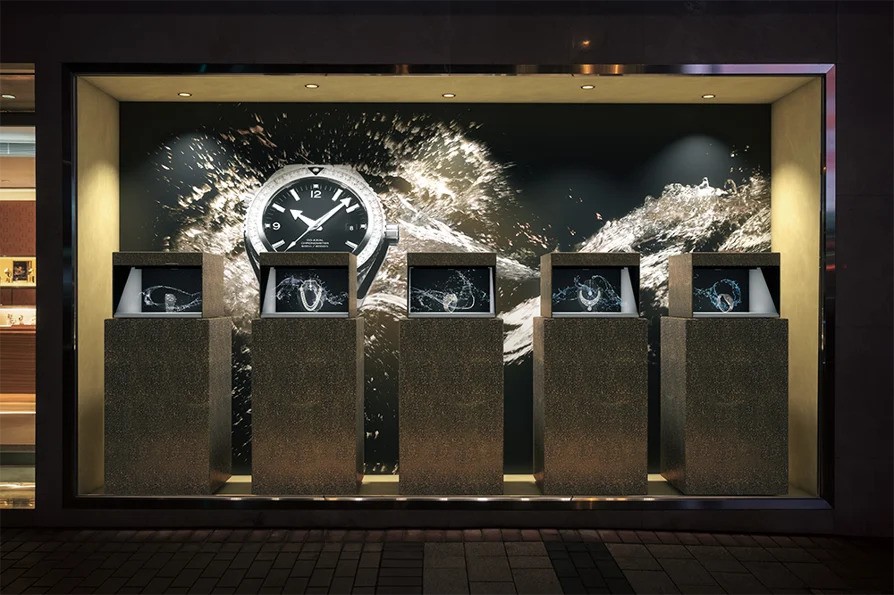
That’s where 3D holographic displays come in. Not as a gimmick, but as a practical booth tool you can use to:
-
pull people in from the aisle,
-
explain your product faster than a sales pitch can,
-
and create a memorable brand moment people talk about after they leave your stand.
Companies like 1st World Holograms position their holographic displays specifically for campaigns, retail activations, and trade show use—including rent or purchase options, plus support for content creation and logistics.
The fast answer
A 3D holographic display at a trade show works best when you treat it like your booth’s “headline,” not your whole story.
If you do only three things, do these:
-
Put the hologram where it’s visible from the aisle (not hidden at the back).
-
Run short loops that communicate one idea at a time (10–20 seconds).
-
Connect it to a simple conversion action: scan, demo booking, giveaway entry, or “show price sheet.”
(Keep reading for the exact playbook.)
What “3D holographic display” means in a trade show context
When most people say “hologram,” they imagine sci‑fi projections floating in mid-air.
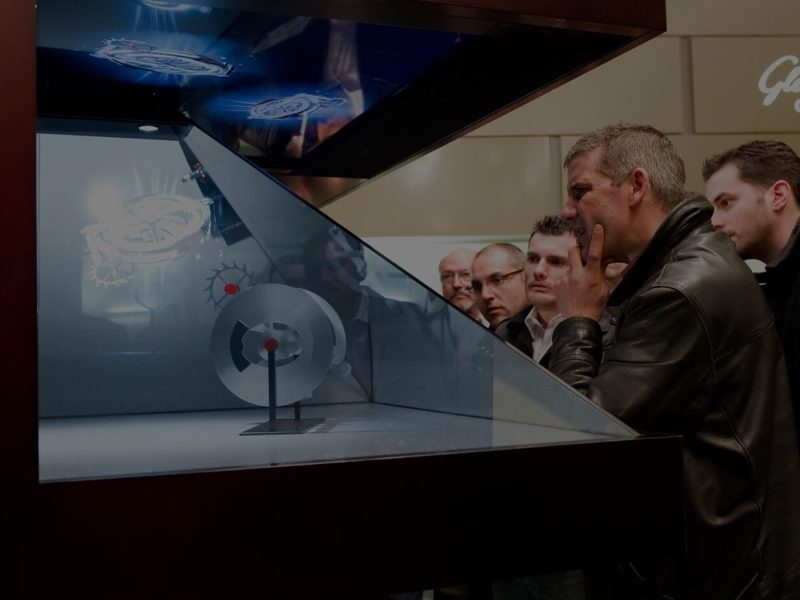
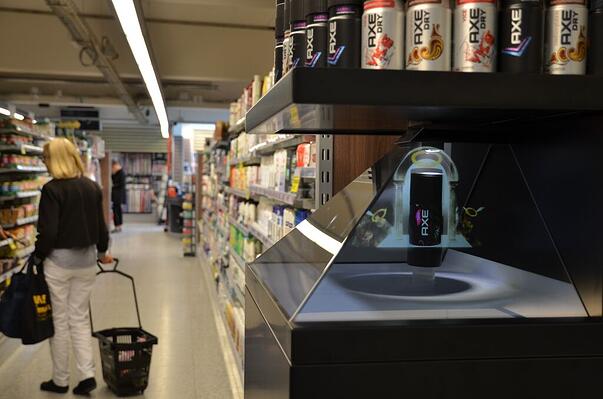
In reality, the trade show versions that work consistently are high-end “hologram-like” displays that create a glasses-free 3D illusion—built for bright, busy environments where lots of people need to see the same thing at once. 1st World Holograms highlights this kind of glasses-free, multi-viewer experience as a reason the displays can stop passers-by in high-traffic spaces.
Why holographic displays outperform “just another screen” at expos
A TV on your back wall is easy to ignore because everyone has one.
A holographic display is different because it creates:
-
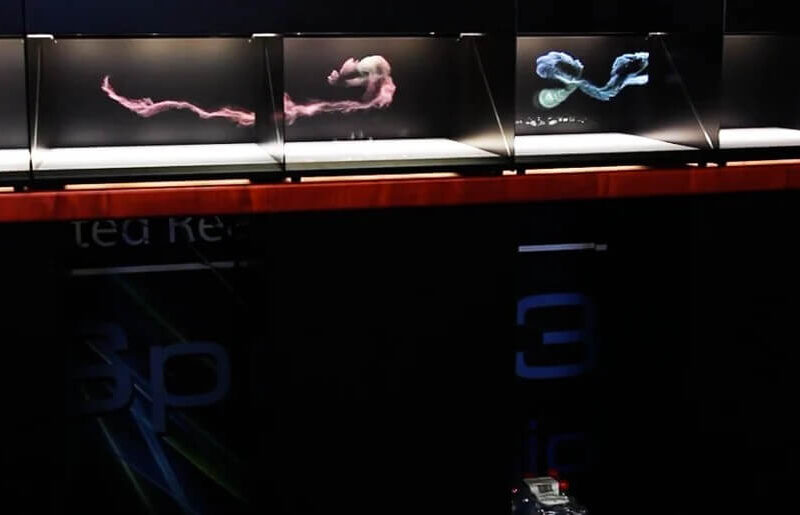
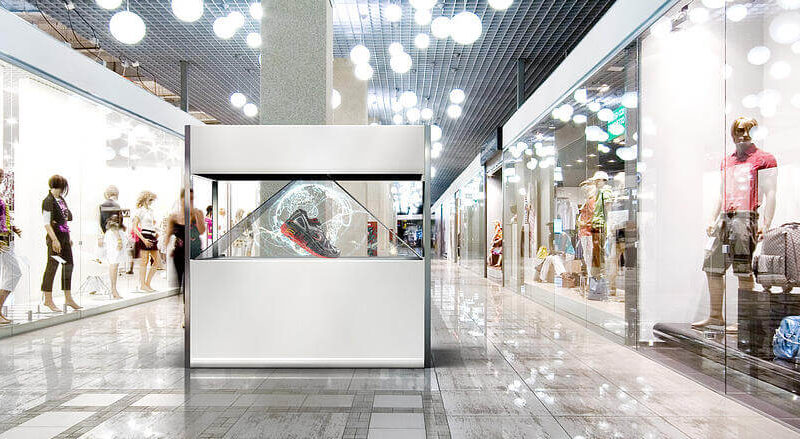
depth (your product appears to exist in space),
-
novelty (people slow down just to understand what they’re seeing),
-
and shared viewing (small groups can watch together, which naturally builds crowd energy).
This is exactly the positioning 1st World Holograms uses: helping brands “stand out from the crowd” with rent-or-buy holographic display options for marketing and trade show environments.
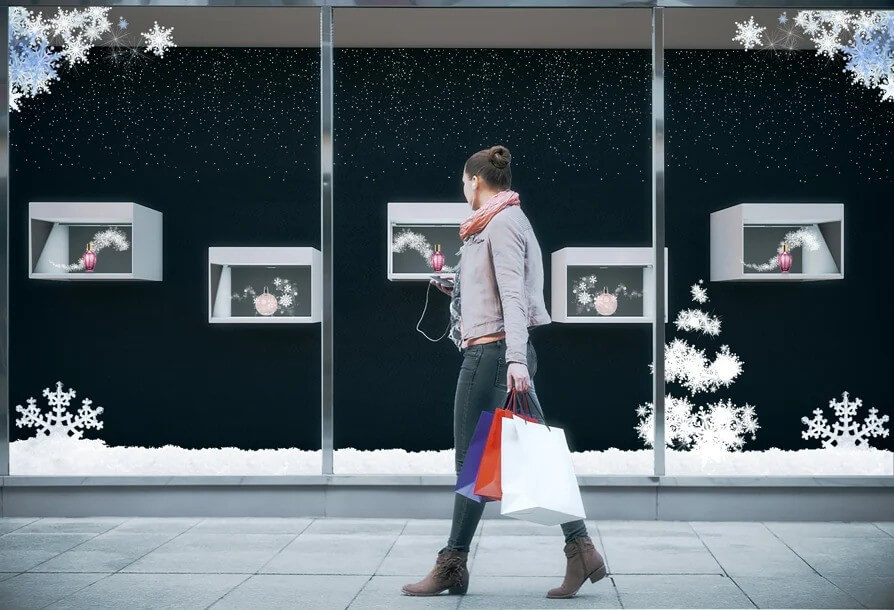
Choosing the right holographic display for your booth
Think of display choice like booth size choice: the “best” one is the one that matches your space, your message, and your staffing plan.
Here’s a practical breakdown based on the Realfiction-focused range 1st World Holograms promotes:
1) Dreamoc HD3.2: compact crowd-stopper for tight booths
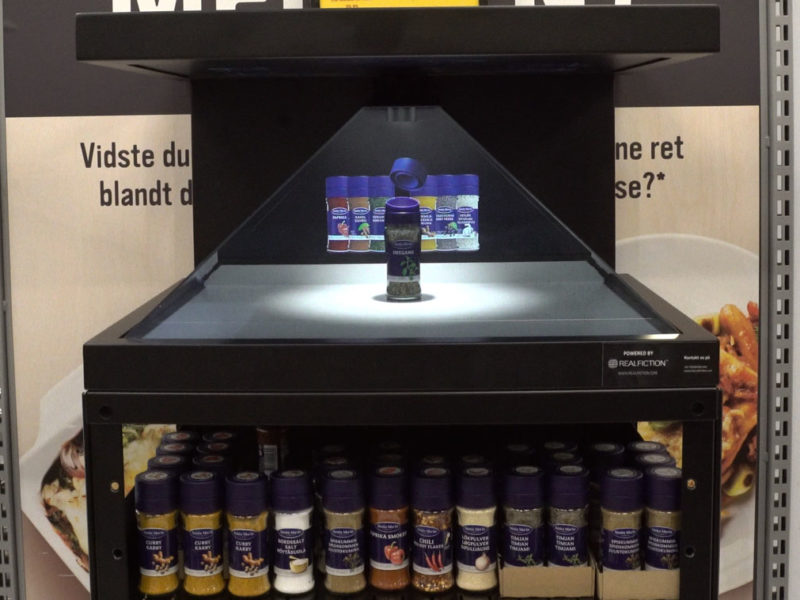
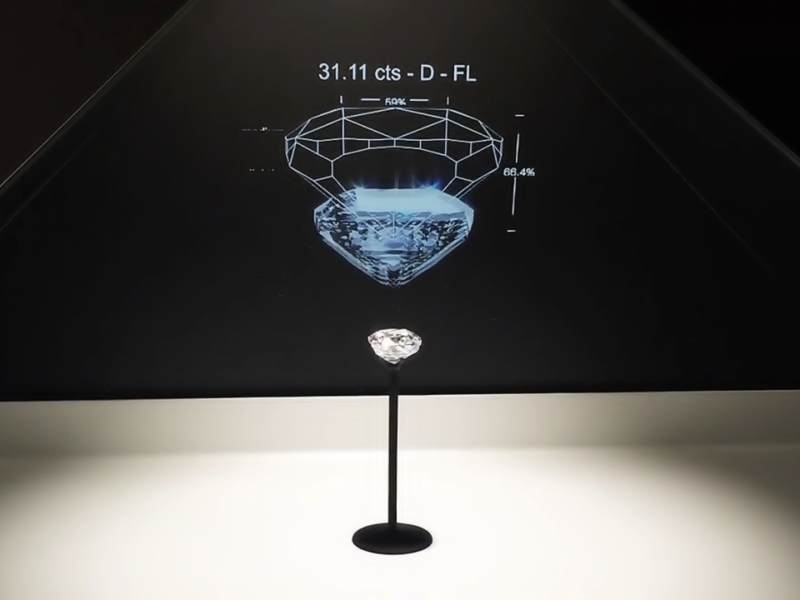
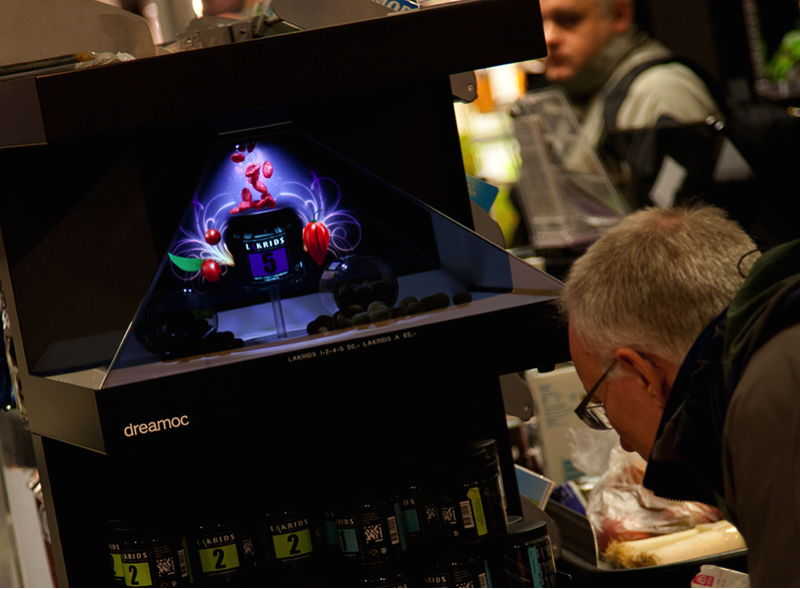
If your booth is small, the Dreamoc HD3.2 can still create a buzz. It’s described as compact with a wide viewing angle and built-in audio—designed to attract attention in retail and trade show settings.
Best for:
-
tabletop/bench setups,
-
“hero product” moments,
-
fast foot-traffic capture when you’ve got limited square meters.
What to show: one product + one key benefit (on a loop), not your whole catalog.
2) Dreamoc XL5: when you want a bigger impression (without going massive)
1st World Holograms describes the Dreamoc XL5 as the HD3.2’s bigger brother, with more display “real estate,” and even calls out that it’s designed to be your best friend if you have lots of trade shows/events on your schedule.
Best for:
-
mid-sized island or corner stands,
-
product portfolios (especially if you want to show multiple SKUs quickly),
-
brands that need “premium but practical.”
3) Dreamoc Diamond: the “you cannot ignore this” centerpiece
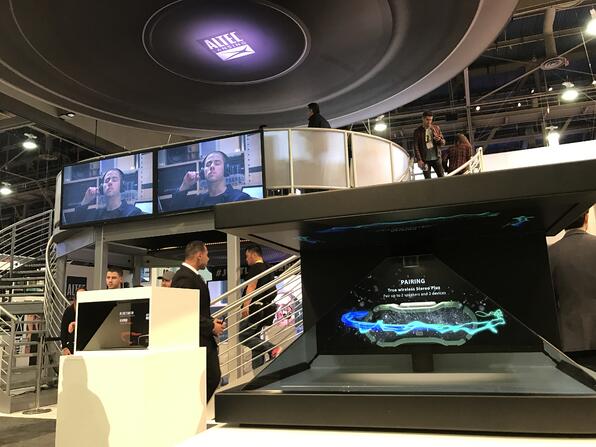
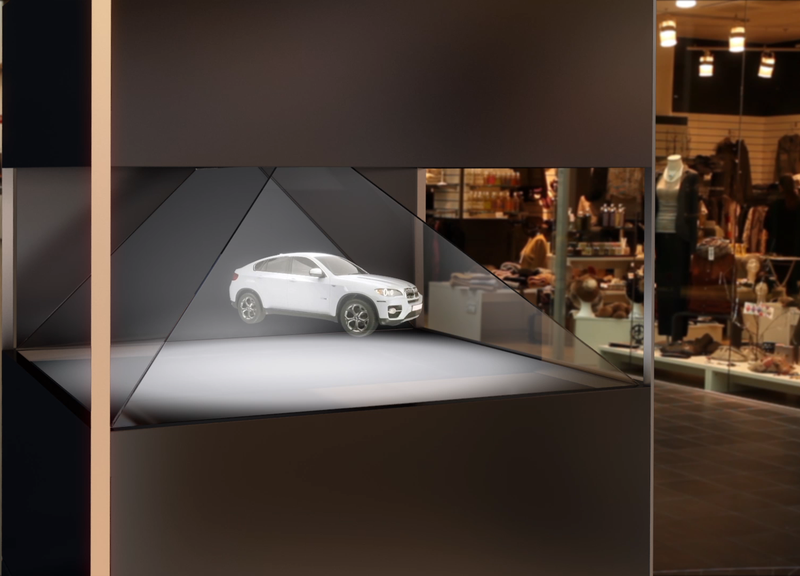
If your booth strategy is “we’re here to dominate,” this is the one built for presence. 1st World Holograms positions the Dreamoc Diamond as the largest and most impressive display in their range—“regal, elegant and grand.”
Best for:
-
big launches,
-
high-value audiences (enterprise, luxury, automotive, tech),
-
booths where you want a visible landmark people can navigate toward.
4) DeepFrame: mixed reality “window” overlays for wow-factor storytelling
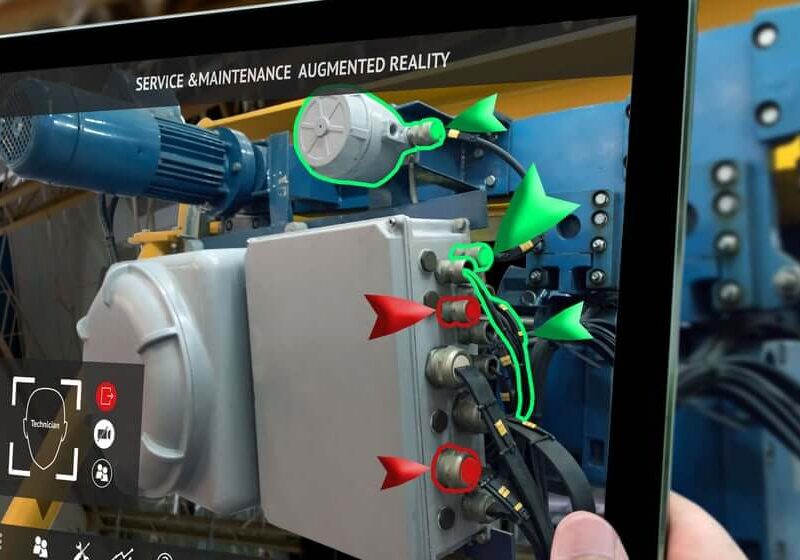
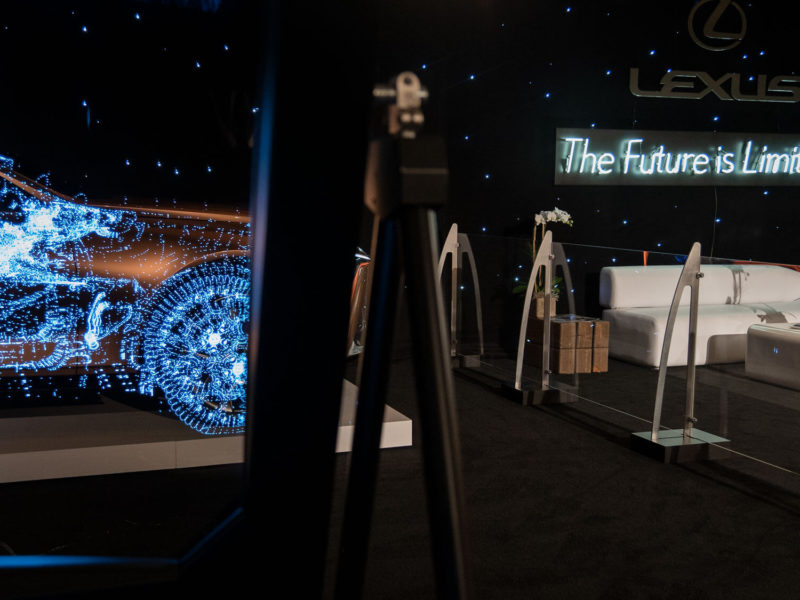
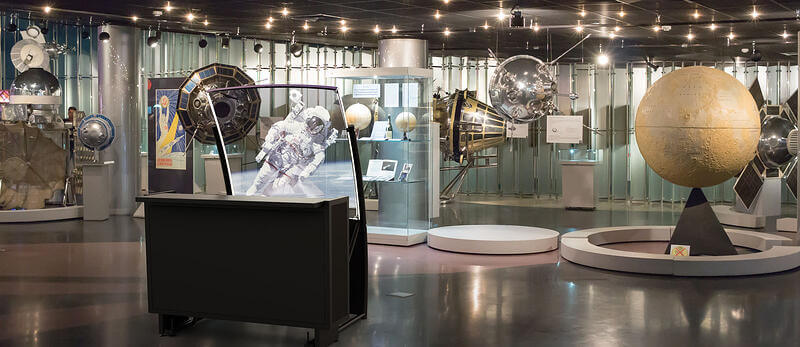
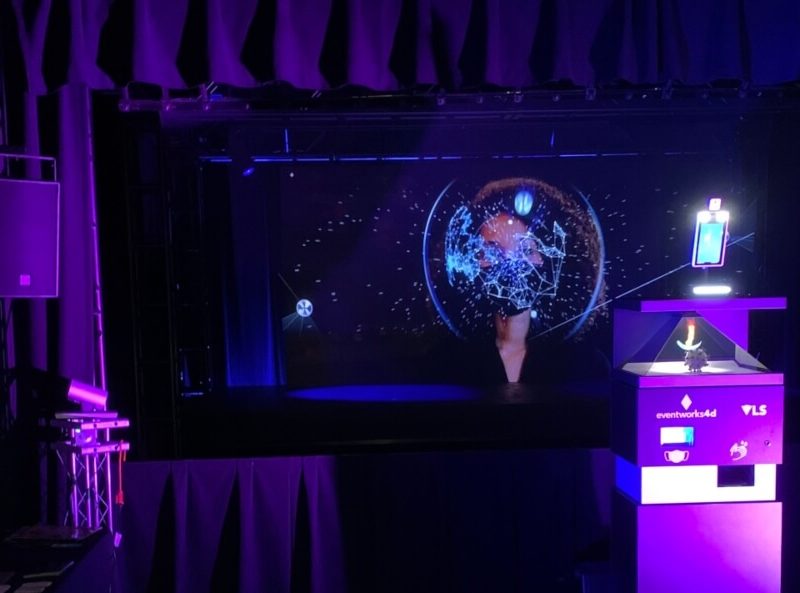
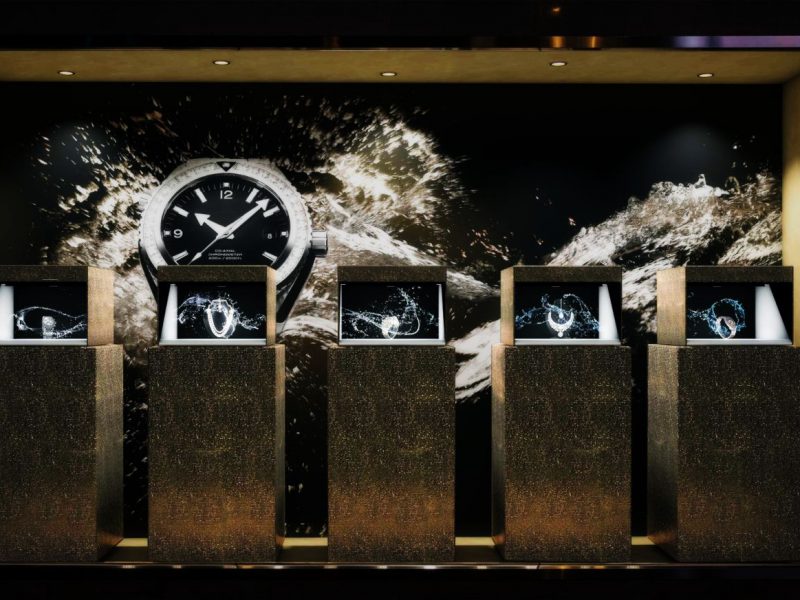
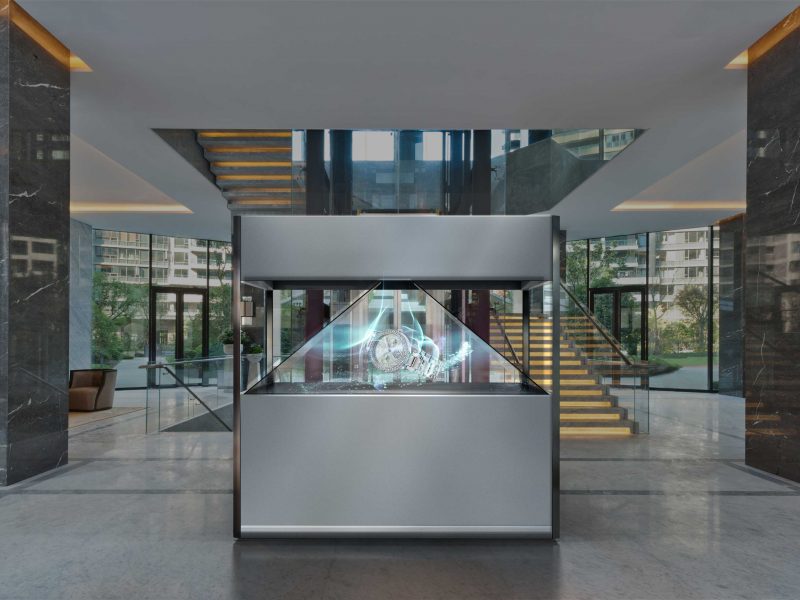
DeepFrame is presented as a window into a different reality, where digital 3D content appears layered onto the real world for a lasting impression.
1st World Holograms also describes DeepFrame as a large display that can convincingly mix physical reality with lifelike 3D animation without glasses.
Best for:
-
“future of…” storytelling,
-
demos where environment context matters (smart cities, infrastructure, medical, energy),
-
moments where people need to feel the scale.
The trade show content playbook: what to show (so it doesn’t feel like a gimmick)
The fastest way to waste a holographic display is to treat it like a fancy screensaver.
Instead, build content around trade show realities:
-
noisy aisle,
-
short attention spans,
-
and visitors who want clarity fast.
A simple content formula that converts
Loop structure (10–20 seconds):
-
Hook (2–3s): the unexpected visual (movement + depth)
-
Reveal (5–8s): product name + what it is
-
Proof (5–8s): one key benefit or differentiator
-
Action (2–3s): “Scan to book a demo” / “Ask for pricing” / “See it live”
Content types that work especially well
-
Exploded views (perfect for complex products)
-
Before/after transformations
-
Process visualisations (how it works in 3 steps)
-
Feature callouts that appear on the product
-
Launch countdowns for timed booth moments
If you don’t have existing 3D assets, 1st World Holograms explicitly offers holographic content creation, positioned around aligning content with your marketing strategy and brand objectives (so it’s not just “cool visuals”).
Booth placement: “eye level is buy level” still matters
At a trade show, sightlines are everything. If people can’t see the display from the aisle, it can’t do its job.
1st World Holograms makes a very specific point here: rental packages include stands designed to bring the units to eye level, improving visibility and engagement.
Placement rules that tend to work:
-
Put the display within the first 2–3 meters of your open aisle edge.
-
Angle it so passers-by catch movement in their peripheral vision.
-
Don’t block it with brochure towers (seriously).
-
If it’s a showstopper, give it space so people can form a semi-circle without clogging your entrance.
Renting vs buying for trade shows
This depends on how often you exhibit.
Renting makes sense when:
-
you do 1–4 shows per year,
-
you want the impact without the storage/maintenance,
-
you’re testing which display style works for your audience.
1st World Holograms repeatedly positions “rent or purchase” as core options, with “inclusive packages” that can cover everything from transportation to content production.
Buying makes sense when:
-
you’re doing a busy calendar of expos + roadshows,
-
you want to reuse the setup across retail, activations, and events,
-
you already have an internal team (or partner) producing content at scale.
(You can still mix both: buy one “home base” unit, rent a second unit for major launches.)
The boring-but-important part: logistics (where most booths fall apart)
Trade shows punish complexity. Anything that’s fragile, hard to transport, or fiddly to set up becomes a stress multiplier at 6am bump-in.
That’s why it’s worth paying attention to practical details like:
-
flight cases,
-
safe transport,
-
stands included,
-
and an end-to-end process.
1st World Holograms specifically notes that rental packages include a flight case for safe, convenient transportation and a stand to bring displays to an ideal viewing level.
They also talk about using partnerships to streamline the content process and reduce risk so you get more out of the displays.
Translation: your booth team can focus on the show, not on troubleshooting.
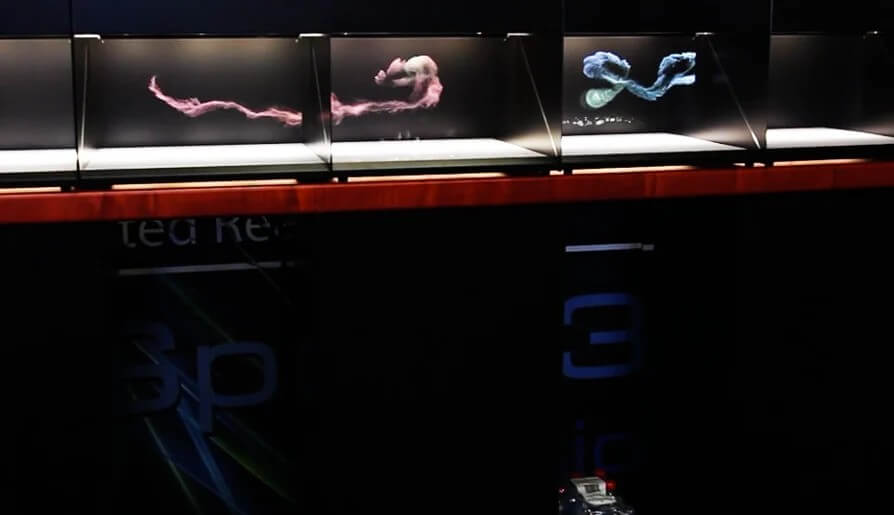
How to turn “wow” into leads (so it actually pays for itself)
A holographic display is an attention engine. Your job is to connect attention to a clear next step.
Here are lead capture mechanics that work well at trade shows:
1) The 15-second “micro demo”
Staff script:
-
“Want to see the one feature that makes this different?”
-
(Show loop, point to one element)
-
“If I send you the spec sheet / pricing / demo video, what’s your best email?”
2) QR + payoff
Don’t use QR codes as decoration. Use them as a trade:
-
“Scan to get the 2-minute version”
-
“Scan to see pricing tiers”
-
“Scan to book a time this afternoon”
3) Crowd-to-conversation handoff
When 2–5 people gather, staff should ask:
-
“Quick question—what brought you to the show?”
That single question turns spectators into qualified conversations.
FAQ (AEO-friendly)
Do holographic displays work in bright expo halls?
Yes—trade show-focused systems are built to be visible in busy environments, and many are designed as glasses-free shared experiences (so you’re not relying on one person standing in one perfect spot).
What should I show on a holographic display at a trade show?
Show one product + one message per loop. Keep it short, visual, and repeatable. Then connect it to a simple action (scan, demo booking, or “talk to us”).
Which display is best if I do a lot of trade shows each year?
If you want a practical “repeatable” event setup, 1st World Holograms explicitly positions the Dreamoc XL5 as a strong fit for busy trade show schedules.
Do I need custom 3D content?
You’ll get the best results with content designed for your product story. 1st World Holograms offers holographic content creation aligned to marketing strategy and brand objectives, which is exactly what trade show messaging needs.
Is renting complicated (transport, setup, etc.)?
It doesn’t have to be. 1st World Holograms notes rental packages can include flight cases for transport and stands for ideal viewing height.
What’s the difference between Dreamoc and DeepFrame?
Dreamoc systems are encased “hologram-like” displays (great for product showcases), while DeepFrame is positioned as a mixed reality window that layers digital 3D content onto the real world.
If you’re exhibiting this year and want a booth feature that genuinely cuts through the noise, 1st World Holograms offers holographic displays for rent or purchase, with inclusive options that can cover transport, stands for eye-level viewing, and content production—so you can focus on leads, not logistics.